
This creamy white sauce may be called "basic," but there's nothing plain about it once you know how to make it your own. Whether you're drizzling it over vegetables, stirring it into casseroles, or using it as the base for a rich soup or pasta dish, the flavor possibilities are endless. You'll learn how to build a smooth, velvety cream sauce base from scratch and how to tweak it to suit whatever you're cookin' up.
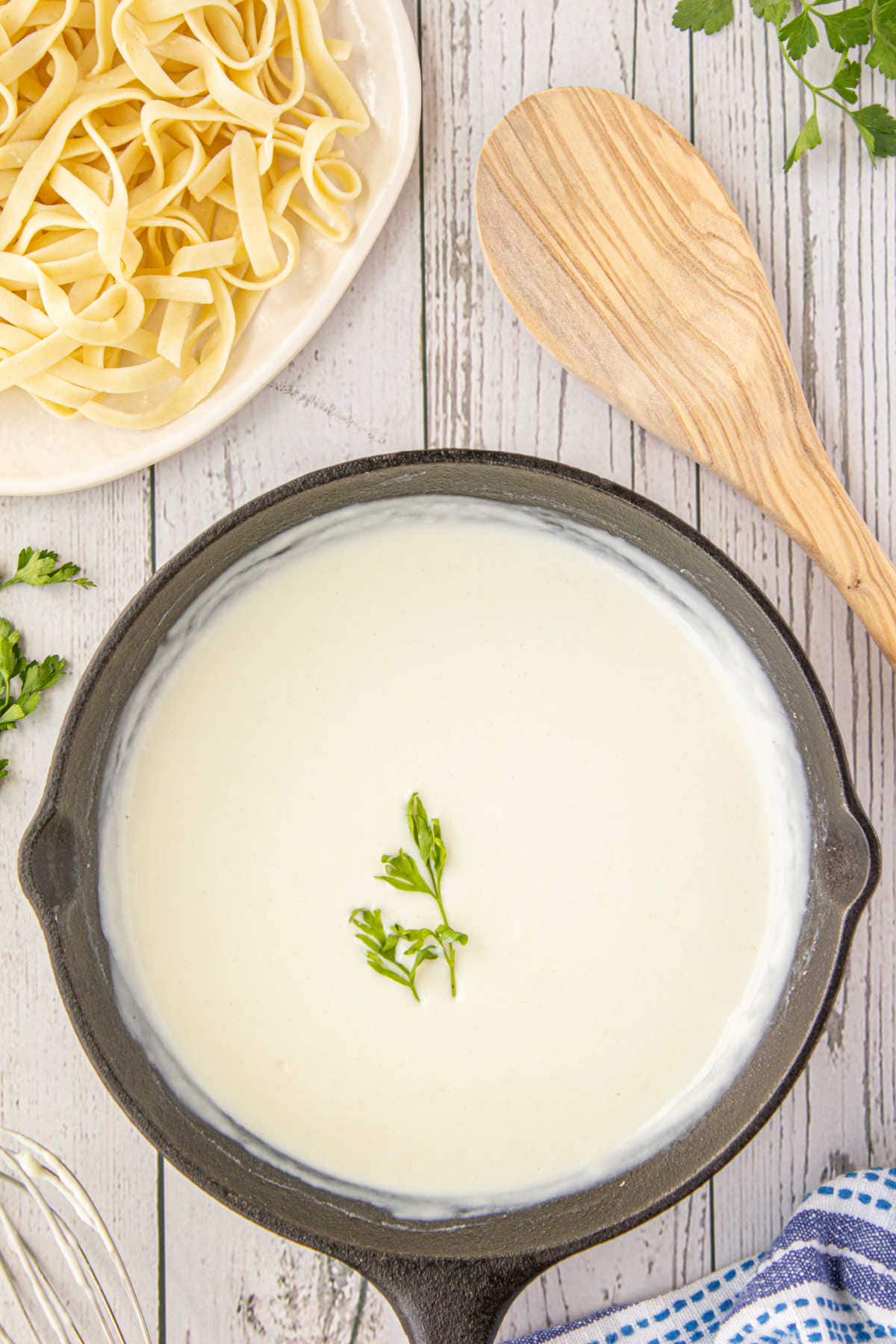
Table of Contents
What is a cream sauce base?
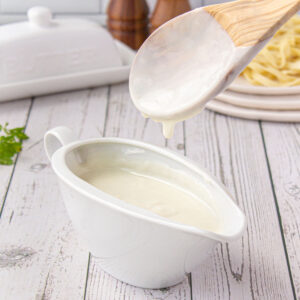
A cream sauce base is a simple white sauce made with butter, flour, and milk. Professional cooks call the butter and flour mixture a roux. Once milk is whisked in, it creates a smooth, creamy sauce that can be turned into dozens of other recipes.
Use a cream sauce base for:
- macaroni and cheese
- chicken casseroles
- creamed vegetables (like this creamed cabbage side dish)
- homemade soups
- scalloped potatoes
- pasta dishes
- homemade cream soup bases for casseroles
Think of it as the little black dress of your recipe collection. Dress it up however you like.
Why this cream sauce is one of my kitchen essentials
- Takes 12 minutes from start to finish
- Budget-friendly and pantry-staple approved
- Thickens up beautifully for casseroles, veggies, or pasta
- Endless flavor variations
🧾 Ingredients for basic cream sauce base
You can substitute alternative milks in this cream sauce but you'll lose the richness and texture - it will be a bit thin and watery.
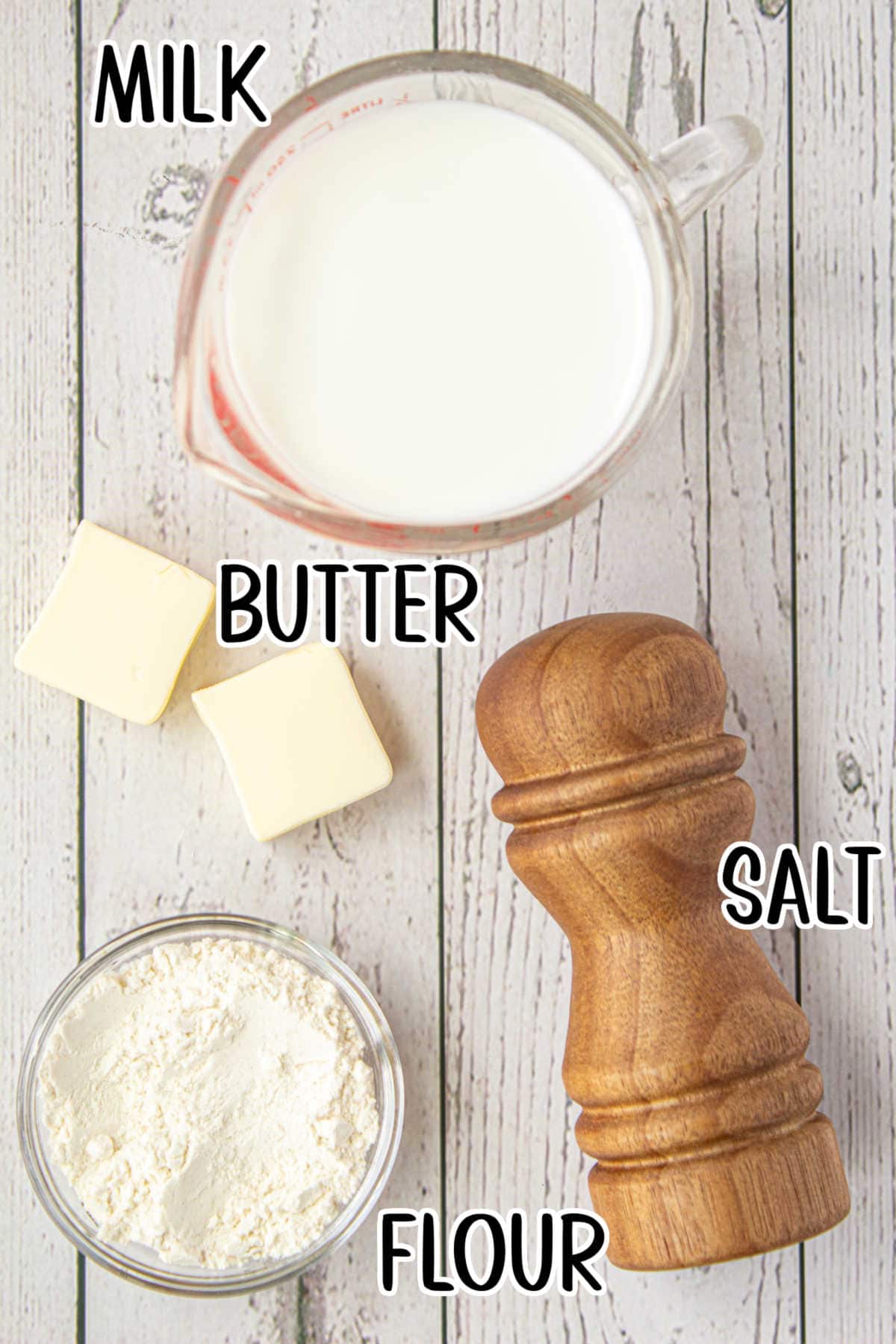
- Milk: Whole milk or cream is the Cadillac of cream sauce ingredients. You can use lower-fat milk or plant based milk if you need to. Evaporated milk will make the sauce very creamy without the extra fat of cream. It's what I use most often.
- Butter: Real butter, not margarine. We're making a classic sauce, not punishing ourselves for past choices. Butter and flour create the roux, which sounds fancy but is really just the Southern equivalent of holding the whole operation together with hairspray and determination.
- Salt: Just enough to wake everything up and remind it that it has a purpose in life. Start with a pinch. You can always add more.
- Flour: Plain all-purpose flour thickens the sauce and keeps it smooth. Nothing trendy. Nothing imported. Just dependable pantry flour doing its job without needing validation from social media.
How to adjust cream sauce thickness
Recipes call for white sauce in various consistencies. For example, a cream soup might have a thin cream sauce as a base while a sauce for vegetables might call for a medium one.
| Type | Milk | Butter | Flour | Used for |
|---|---|---|---|---|
| Thin | 1 cup | 1 Tbs | 1 Tbs | Cream soups |
| Medium | 1 cup | 2 Tbs | 2 Tbs | Sauce for vegetables |
| Thick | 1 cup | 3 Tbs | 3 Tbs | Binder for souffles/ casseroles |
Use the medium version for vegetables like broccoli or these old-fashioned creamed peas and potatoes, and the thick version when you're making casseroles or homemade cream soup substitutes.
📖 Recipe
Basic Cream Sauce Recipe
Print Pin Recipe Rate RecipeIngredients
Instructions
- Melt butter in a medium saucepan over medium low heat.
- Add 2 tablespoons of flour to melted butter and stir with a whisk to prevent any lumps.
- Add salt and pepper to taste.
- Cook, stirring constantly and scraping the bottom of the pan to keep it from sticking for 2 minutes.
- Pour 1 cup of milk slowly into the butter-flour mixture while whisking constantly, making sure there are no lumps.
- It will start thickening.
- Continue to simmer and stir until thickened.
- Remove from heat and use as desired.
Notes
Nutrition Facts
Nutrition information is estimated as a courtesy. If using for medical purposes, please verify information using your own nutritional calculator. Percent Daily Values are based on a 2000 calorie diet.
This recipe has been tested several times. If you choose to use other ingredients, or change the technique in some way, the results may not be the same.
Love this recipe?
Subscribe to the free membership group and never miss another recipe!
🔪 How to make basic cream sauce
Use a good wire whisk. Look for one that is less flimsy with more wire loops but avoid non-stick-coated whisks. They are generally flimsier and not tough enough to break up stubborn clumps of flour. Sometimes the vinyl flakes off - ewww.
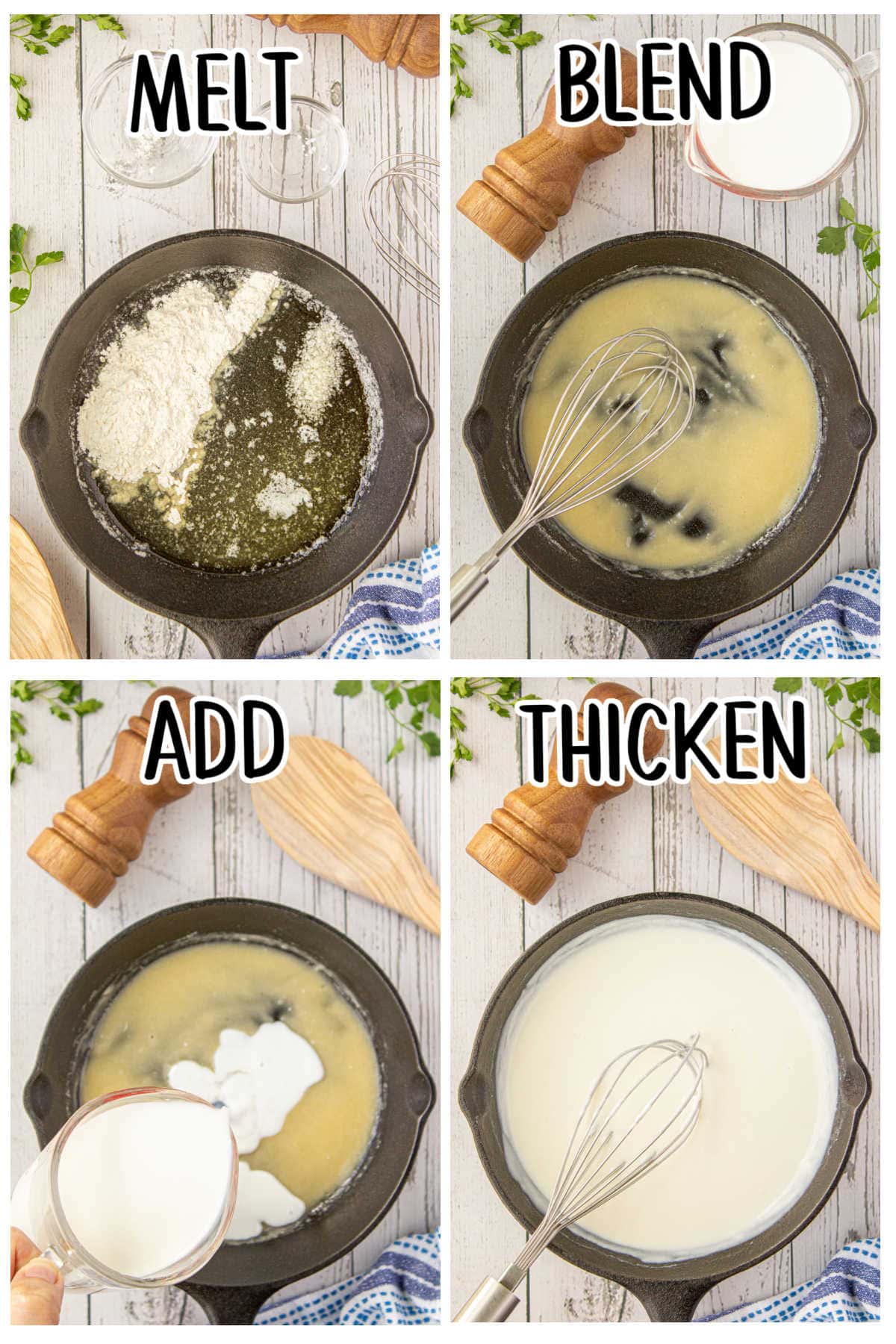
- Melt the butter and add the flour. Congratulations, you've just started a roux, which sounds fancy enough to charge extra for but is really just butter and flour getting acquainted.
- Whisk until it forms a smooth paste. No lumps. No drama. We have enough of both elsewhere in our lives.
- Slowly add the milk or cream. Pour it in while whisking like you're trying to keep a family secret from spreading through a small Southern town.
- Keep whisking until smooth and creamy. In a few minutes you'll have a silky sauce that looks like it took far more effort than it actually did. We love that for us.
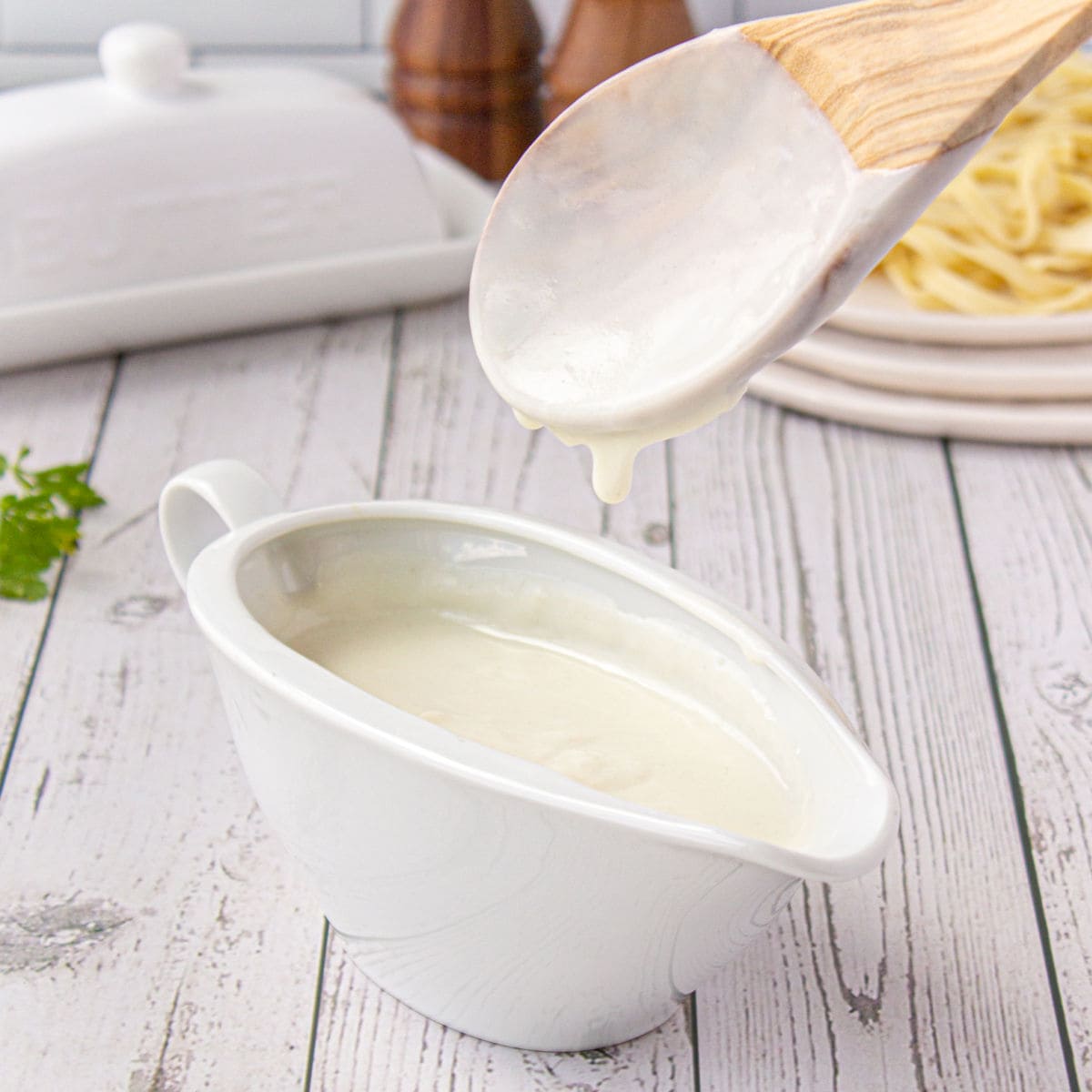
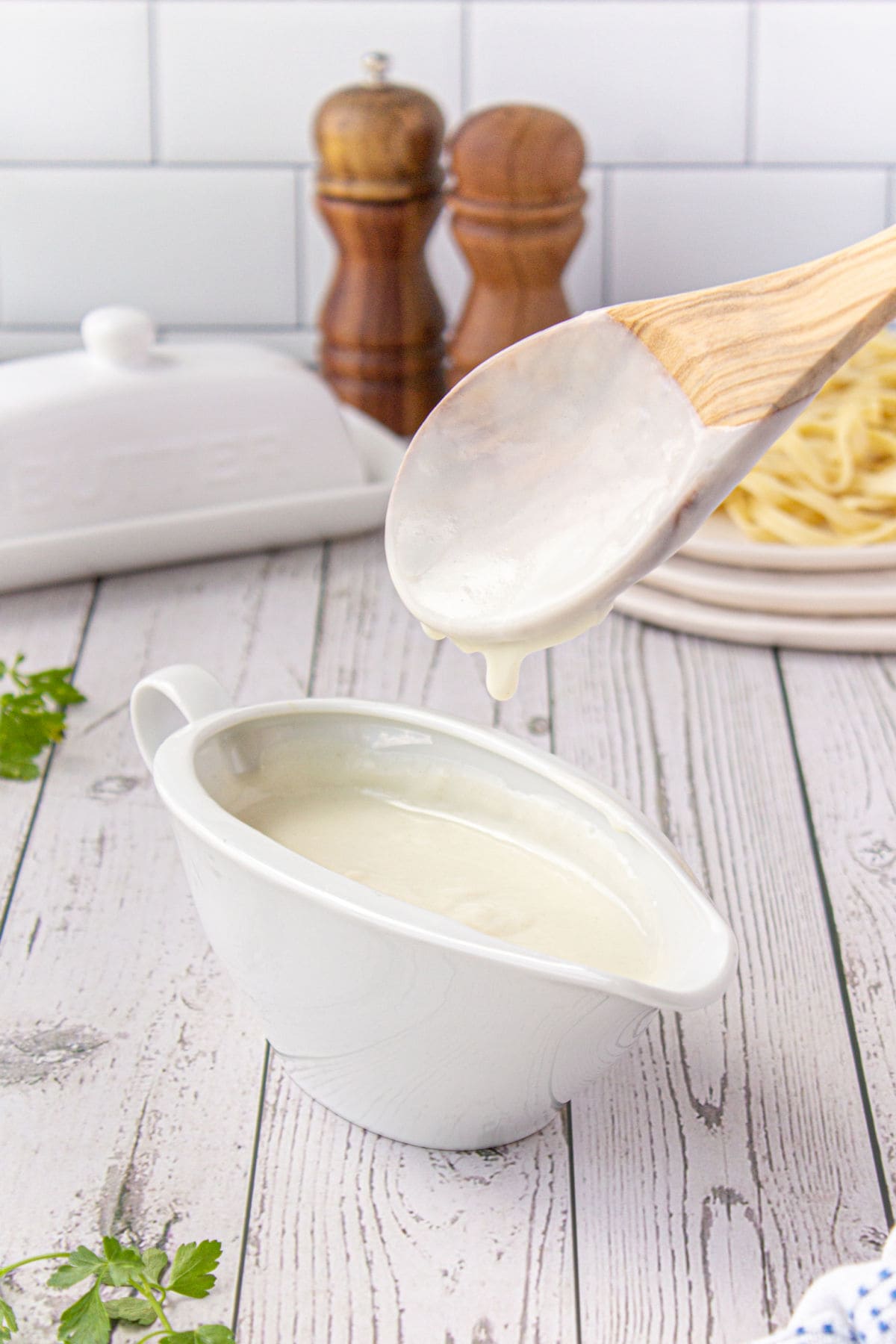
You'll know your sauce is thick enough when it coats a spoon without running off. You can run your finger down the spoon and it will leave a track in the sauce coating.
📖 Cream sauce variations
Once you know how to make the cream sauce base it's stupid-easy to make variations. Different cheeses, different herbs, and different flavors are what make this easy cream sauce so flavorful.
- Cheese sauce: stir in ¾ cup of cheese. Cheddar cheese is always a good option. Perfect for macaroni and cheese.
- Garlic cream sauce: saute 1 clove of garlic in the butter and remove it before adding the flour, or sprinkle in garlic powder to taste.
- Herb sauce: add 1 teaspoonful of fresh chopped herbs.
- Mustard sauce: stir in 1 tablespoon dijon mustard at the end of cooking.
- Mornay sauce: stir in ¼ cup Swiss cheese and a pinch of freshly grated nutmeg.
- Curry sauce: add ½ teaspoon curry powder.
- Soubise sauce: sounds fancy, but it's just white sauce with cooked pureed onions stirred in.
- Dairy-free white sauce: substitute dairy-free milk and olive oil for the milk and butter. Use 1 extra tablespoon of olive oil than the amount of butter called for.
- Mushroom sauce: add ¼ cup chopped, sauteed mushrooms.
- Celery sauce: add ¼ cup finely chopped, sauteed celery.
- Cream of chicken: add 1 teaspoon of chicken bouillon paste (Better than Bouillon or similar product). You could use a splash of chicken broth, but will likely need a little more flour to thicken it up-and the flavor won't be as strong as with bouillon.)
👩🍳 FAQs
Absolutely. Whole milk or evaporated milk are my favorite choices for everyday cream sauce because it creates a rich, creamy texture without being too heavy. Lower-fat milk and plant-based alternatives will work, but the sauce won't be quite as thick or velvety.
You can! However, though similar, alfredo sauces aren't traditionally considered a bechamel sauce. You can still use this base (with heavy cream) to make an easy alfredo sauce recipe. Add parmesan cheese, Italian seasoning, garlic powder, and parsley. (Or try this fettuccine alfredo-it's better than Olive Garden's!)
There is a lot of discussion between famous chefs about whether you should stir hot milk, warm milk, or cold milk into a bechamel. Personally, I choose warm or room-temperature milk. It's not cold enough that the sauce will splatter, but it's also not so hot that the sauce will boil before it has time to thicken.
Yes ma'am, you sure can. Make it up to 3 days in advance and store it in the fridge in an airtight container. When you're ready to use it, warm it slowly over low heat and whisk it like you mean it. It may look like a hot mess at first, but it'll smooth right out. Just like your hair after a humid day and a flat iron.
Usually? You rushed it. Don't feel bad-we all get impatient. Lumps happen when the flour isn't whisked well enough into the melted butter before adding the milk. Another culprit? Adding cold milk too fast. Next time, warm the milk slightly and pour it in gradually, whisking the whole time like you're trying to impress Julia Child. No judgment here-just keep whiskin' and it'll come together.
In everyday home cooking, most people call any smooth, creamy sauce made from butter, flour, and milk or dairy a cream sauce. This recipe works beautifully as either a basic white sauce or a cream sauce base for casseroles, vegetables, soups, and pasta dishes.
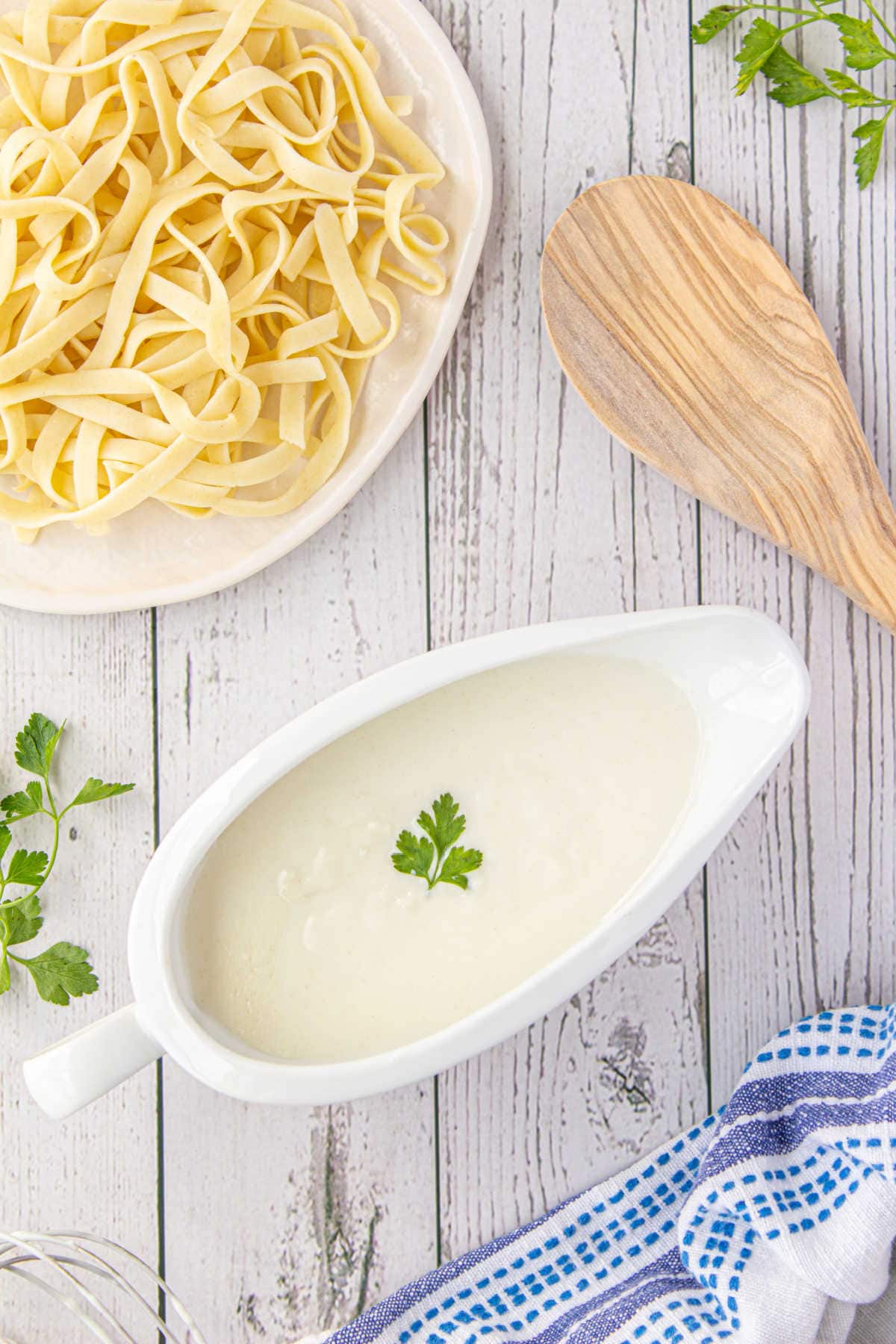
Some recipes demand special equipment, expensive ingredients, and the patience of a kindergarten teacher on the last day before summer vacation. This cream sauce base isn't one of them.
Keep butter, flour, and milk in the kitchen and you're never more than a few minutes away from rescuing dinner. Whether you turn it into cheese sauce, spoon it over vegetables, or stir it into a casserole, this humble cream sauce base has been saving suppers longer than most kitchen trends have existed.
Not bad for four ingredients and a whisk.


Comments
No Comments