


If your homemade bread comes out dense, squat, or just… disappointing, you're not alone. Getting that tall, light, bakery-style rise isn't just about yeast - it's about what you add to the dough.
These 7 proven dough enhancer ingredients help your bread rise higher, softer, and more evenly every single time. I've used them for decades, and they're the difference between "it'll do" and "who made this?!"
And if you don't want to mess with guessing? Here's my homemade dough enhancer recipe, the exact combination I've relied on for over 54 years to get high, fluffy loaves that stay fresh longer.
Table of Contents
- 🏆 The best ingredients to make bread rise higher
- 🥰 Is this bread dough enhancer trick for you?
- 🍞 About dough enhancers
- 🙋🏻♀️ What does dough enhancer do?
- 🫚 Ginger helps bread rise faster
- 🥔 Potato water helps bread rise higher and softer
- 🌾 Vital wheat gluten strengthens dough for a higher rise
- 🐄 Dry milk powder keeps bread soft and helps it rise higher
- 🍊Vitamin C powder helps yeast work better for a higher rise
- 🫘 Lecithin keeps bread soft longer and improves texture
- 🥐 Pectin helps bread stay moist and soft
- 🥚Other ingredients that can help bread rise
- 👩🍳 FAQs
- 📚 Related recipes and troubleshooting
- 🫶 Restless Chipotle recommends
- 📖 Recipe
- 💬 Comments
This post may contain affiliate links. If you grab something through them, I earn a small commission-at no extra cost to you-and I appreciate it more than good coffee.
🏆 The best ingredients to make bread rise higher
Quick answers: ingredients that help bread rise higher
- Ginger (boosts yeast activity fast)
- Potato water (traps gas bubbles for higher rise)
- Vital wheat gluten (strengthens structure)
- Dry milk powder (adds softness + moisture)
- Vitamin C (improves yeast performance)
- Lecithin (keeps bread soft longer)
- Pectin (holds moisture and improves texture)
🥰 Is this bread dough enhancer trick for you?
This post is for you if...
- Your bread comes out dense instead of light
- Your dough rises… but not impressively
- You want bakery-style softness at home
- You're using whole wheat and it's acting stubborn
- You're tired of bread going stale by tomorrow
🍞 About dough enhancers
Our grandmothers knew exactly what they were doing. Certain simple ingredients can help bread rise higher, bake up lighter, and stay soft longer without turning into a brick by the next day.
These natural dough enhancers, sometimes called bread improvers or dough conditioners, still work just as well now as they did back then.
One of the questions I get asked most often is how I get those tall, fluffy loaves. It's not a secret, and it's not luck. I use the same principles commercial bakeries rely on, just with ingredients you probably already have in your kitchen.
Bread doesn't always rise the way we want it to. Sometimes the yeast is sluggish, sometimes the structure isn't strong enough to hold the air bubbles. That's where dough enhancers come in.
And no, this isn't about dumping chemicals into your bread. There are plenty of natural ingredients that help your dough rise higher, bake softer, and hold that texture longer.
If you just want the blend without the explanation here's my homemade dough enhancer recipe that combines everything into one easy blend.
🙋🏻♀️ What does dough enhancer do?
Dough enhancers work behind the scenes to fix the most common bread problems. Instead of relying on one ingredient to do everything, a blend supports the dough from multiple angles.
They help your bread:
- rise higher and more evenly
- develop a stronger structure to hold those air bubbles
- stay soft and tender instead of drying out
- build better flavor as it bakes
- form a golden, more balanced crust
- stay fresh longer without going stale as quickly
Each ingredient plays a different role, which is why combining them often gives the best results.
Below are some of my favorite dough enhancers. You can use them individually or mix and match depending on what your dough needs. When you're ready to try them out this easy no-knead sandwich bread is the perfect recipe to start with.
🫚 Ginger helps bread rise faster
I first learned about adding ¼ teaspoon of powdered ginger from an old cookbook I picked up at a secondhand store. There was a handwritten note on the flyleaf that said to try it, so I did. I've been using it ever since.
Ginger wakes up the yeast and gets it moving faster, which helps your dough rise higher and more evenly. Think of it as that first cup of coffee for your bread. Everything just works better after.
Add ¼ teaspoon of powdered ginger to the warm liquid when you proof the yeast. That's all it takes.
And no, your bread won't taste like ginger. It just rises like it finally got its act together.

🥔 Potato water helps bread rise higher and softer
The next time you boil potatoes, don't salt the water. When they're done, save that cloudy liquid in a Mason jar and stash it in the refrigerator.
When you're ready to bake, warm the potato water to about 110°F and use it in place of the water or milk in your recipe.
That leftover potato starch strengthens the dough and helps trap the gas bubbles from the yeast. The result? Bread that rises higher, stays softer, and has a better texture all the way through.
It also adds a subtle richness, and if you grew up around women who didn't waste a thing, it just feels right to use it.
Just don't hang on to it too long. After a few days it turns sour and will make your kitchen smell like something a swamp hag conjured up for revenge purposes.
🌾 Vital wheat gluten strengthens dough for a higher rise
Wheat gluten is the protein in flour that gives dough its stretch and structure. It's what lets bread trap the gas from yeast and rise tall instead of spreading out and giving up halfway.
Right behind yeast, gluten is one of the most important parts of good bread. When the structure is strong, the loaf rises higher, holds its shape, and bakes up with that soft, airy crumb everyone's chasing.
Adding vital wheat gluten is especially helpful when you're working with whole wheat or other heavier flours that don't naturally rise as high.
Here's how to use it:
- Whole wheat bread: replace 1 tablespoon of flour per cup with 1 tablespoon of vital wheat gluten
- White bread: use about half that amount
- Example: if your recipe calls for 8 cups of whole wheat flour, remove ½ cup of flour and replace it with ½ cup of gluten
- Pizza or chewy breads: add about 1½ tablespoons per cup of flour for a stronger, chewier texture
It's a small change that makes a big difference in how high your bread rises and how well it holds together.
🐄 Dry milk powder keeps bread soft and helps it rise higher
Adding 2 tablespoons of instant dry milk powder per loaf helps bread rise a little higher, stay softer, and hold moisture longer. That means your bread doesn't dry out or go stale nearly as fast.
It also helps create a more golden crust and adds a bit of extra nutrition.
Just mix it in with the first cup of flour. No adjustments needed. You don't need to remove any flour from the recipe.
🍊Vitamin C powder helps yeast work better for a higher rise
Vitamin C (ascorbic acid) is a quiet powerhouse when it comes to soft, high-rising sandwich bread. It strengthens the dough and helps the yeast work more efficiently, which leads to a better rise and a finer, softer crumb.
It also slows down mold and bacteria growth, so your bread stays fresh longer.
This works especially well in whole wheat and enriched breads. I don't usually use it in rustic or artisan-style loaves where you want a more open, coarse texture.
You can grind regular vitamin C tablets into a powder and store it in a Mason jar.
Use about ⅛ teaspoon per loaf, mixing it in with the first cup of flour. No need to adjust anything else.
🫘 Lecithin keeps bread soft longer and improves texture
Lecithin is a natural emulsifier, most commonly sourced from soy, that helps dough hold together more smoothly. It works with the gluten structure to create a lighter, softer loaf and helps keep bread from drying out too quickly.
It also helps protect flavor and extend freshness, which makes a noticeable difference if you're baking sandwich bread or anything you want to last more than a day.
Use about 1 tablespoon per cup of flour, adding it in with the first cup of flour. No other adjustments needed.
🥐 Pectin helps bread stay moist and soft
Pectin is the same natural ingredient used to thicken jams and jellies, and it works just as well in bread to help hold moisture and improve texture.
It can also help reduce the amount of fat in a recipe if you're trying to cut back on oil or butter, without sacrificing softness.
For bread, I prefer using powdered (granular) pectin since it's easier to measure and control.
Use about 1 teaspoon per loaf, mixing it in with the first cup of flour. No other adjustments needed.
🥚Other ingredients that can help bread rise
There are a few other ingredients that can affect how bread rises and bakes, but most of them are already part of standard recipes rather than something you add separately.
For example:
- Eggs add structure and richness, which can support a better rise
- Sugar or honey feed the yeast and help it stay active
You'll see these in many bread recipes already, so there's no need to add extra.
Other ingredients that can be added are:
- Dried potato flakes, which work similarly to potato water by helping the dough hold moisture and rise a little higher
- Apple cider vinegar, some people add a little in place of an equal amount of liquid called for in the recipe.
That said, I tend to stick with the ingredients listed above when I want consistent, reliable results.
👩🍳 FAQs
Ingredients or combinations of ingredients that are added to bread dough to get it to rise better, stay softer, and last longer.
Most of the time, no. Ingredients like dry milk powder, vitamin C, and pectin are added without changing anything else. The main exception is vital wheat gluten, which replaces an equal amount of flour.
Bread improver is just another name for dough enhancer. The terms are used interchangeably.
Yeast produces carbon dioxide gas as it feeds on sugars in the dough. That gas gets trapped in the gluten structure, causing the bread to rise. Ingredients like gluten, vitamin C, and potato water help strengthen that structure so the bread can rise higher.
Dough enhancers improve rise, texture, flavor, and shelf life. They help create a lighter, softer loaf with a better crumb and longer freshness. It helps create a lighter, softer loaf…
Yes. Just follow your bread machine recipe and add the dough enhancer with the other ingredients as directed.
📚 Related recipes and troubleshooting
Dough enhancers do a lot of heavy lifting, but they can't fix everything. If your bread is still acting stubborn, take a look at these guides to dial things in:
🫶 Restless Chipotle recommends
If you're using vital wheat gluten, quality matters. I usually grab Bob's Red Mill Gluten Flour because it's consistent, easy to find, and just works without any guesswork.
And if you can't find lecithin powder locally Kate Naturals Sunflower Lecithin Powder is a good brand.
📖 Recipe
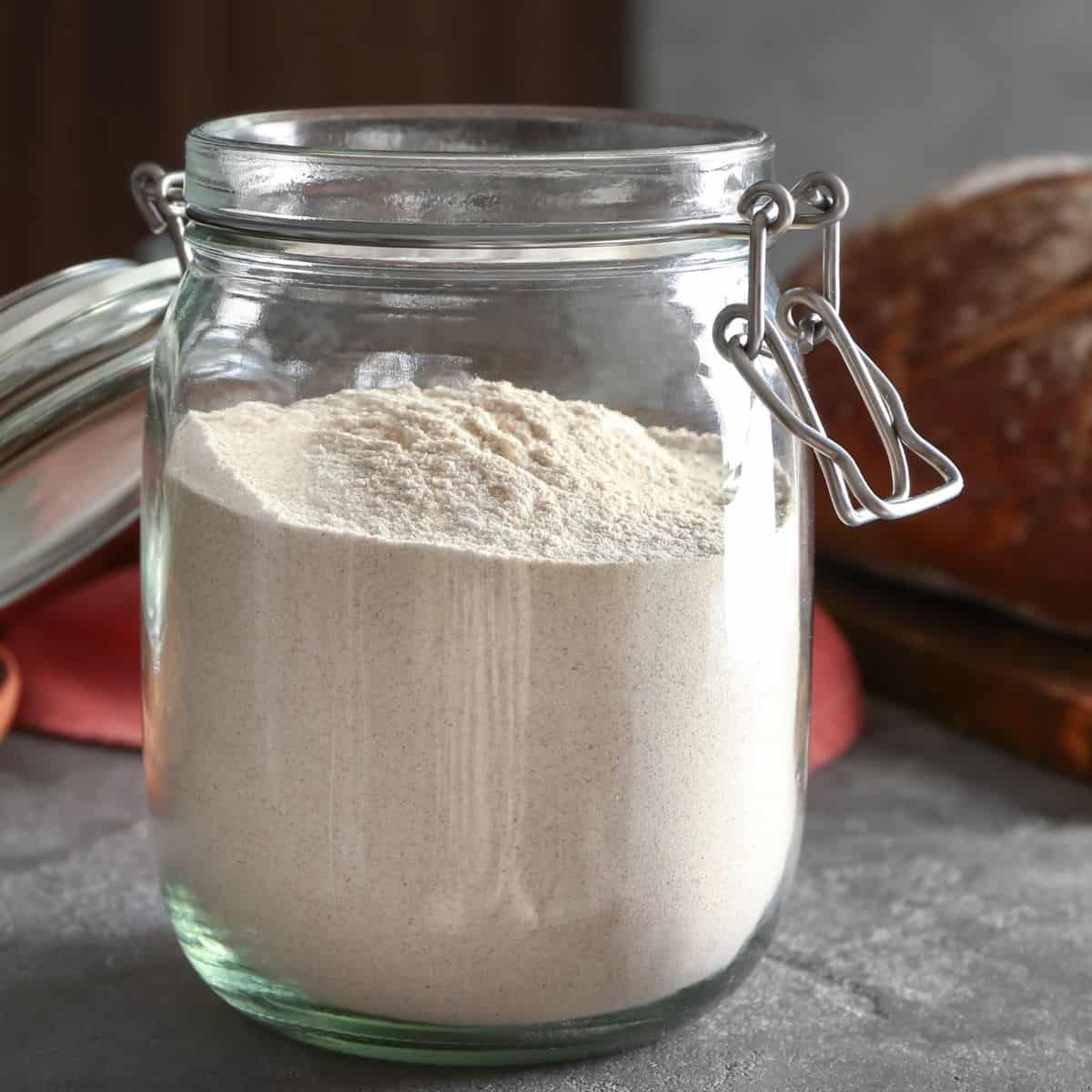
Homemade Dough Enhancer
Print Pin Recipe Rate RecipeIngredients
- 1 cup wheat gluten
- 2 tablespoons lecithin granules
- 1 teaspoon vitamin C granules, or powder
- 2 tablespoons powdered fruit pectin
- 2 tablespoons unflavored gelatin
- ½ cup nonfat dry milk powder
- 1 teaspoon powdered ginger
Instructions
- Mix all ingredients together and store in a tightly covered Mason jar in the refrigerator.
- Always bring to room temperature before using.
- To use: Add 1 to 3 tablespoons per loaf. For best results, replace an equal amount of flour to keep the dough balanced. If you prefer, you can simply add it without adjusting the flour-just expect a slightly firmer dough.
Notes
- Pulse a few times in the blender to make all particles the same size - it will mix in easier that way.
- Shake the jar before using.
- Let come to room temperature before making bread
- This works best with all components added but if you leave out one or two it will still work - just not as well.
Nutrition Facts
Nutrition information is estimated as a courtesy. If using for medical purposes, please verify information using your own nutritional calculator. Percent Daily Values are based on a 2000 calorie diet.
This recipe has been tested several times. If you choose to use other ingredients, or change the technique in some way, the results may not be the same.
Love this recipe?
Subscribe to the free membership group and never miss another recipe!




Glenda Klappenbach says
Do you need to reduce the amount of flour in equal portions as to what you add of the dough enhancer to your bread recipe? Or do you just add 3 TBLS per loaf and not reduce the amount of flour called for in recipe?
Marye says
Some people do one and some the other. I prefer to exchange equal amounts of dough enhancer for the same amount of flour.
Elaine Taylor says
Can you use this in an oat bread recipe and get a good rise? I am 82 and have never heard of this before. Thank you for enlightening all of us.
Marye says
Not unless you have gluten flour in there.
Sandra says
In your recipe you mention the addition of unflavoured gelation. What is its purpose?
Marye says
Great question! Unflavored gelatin is used as a dough strengthener and moisture helper.
When a small amount is added to bread dough, it helps the dough retain moisture, improves the structure of the crumb, and gives the finished loaf a slightly softer, more tender texture—especially helpful for homemade bread that doesn’t have commercial conditioners.
Gelatin is pure protein, so it also gives the dough a bit more elasticity and stability, which can improve rise and help the bread stay fresh a little longer instead of drying out quickly.
You won’t taste it at all—it just quietly does its job behind the scenes.